Same Trust Problem, Different Layers
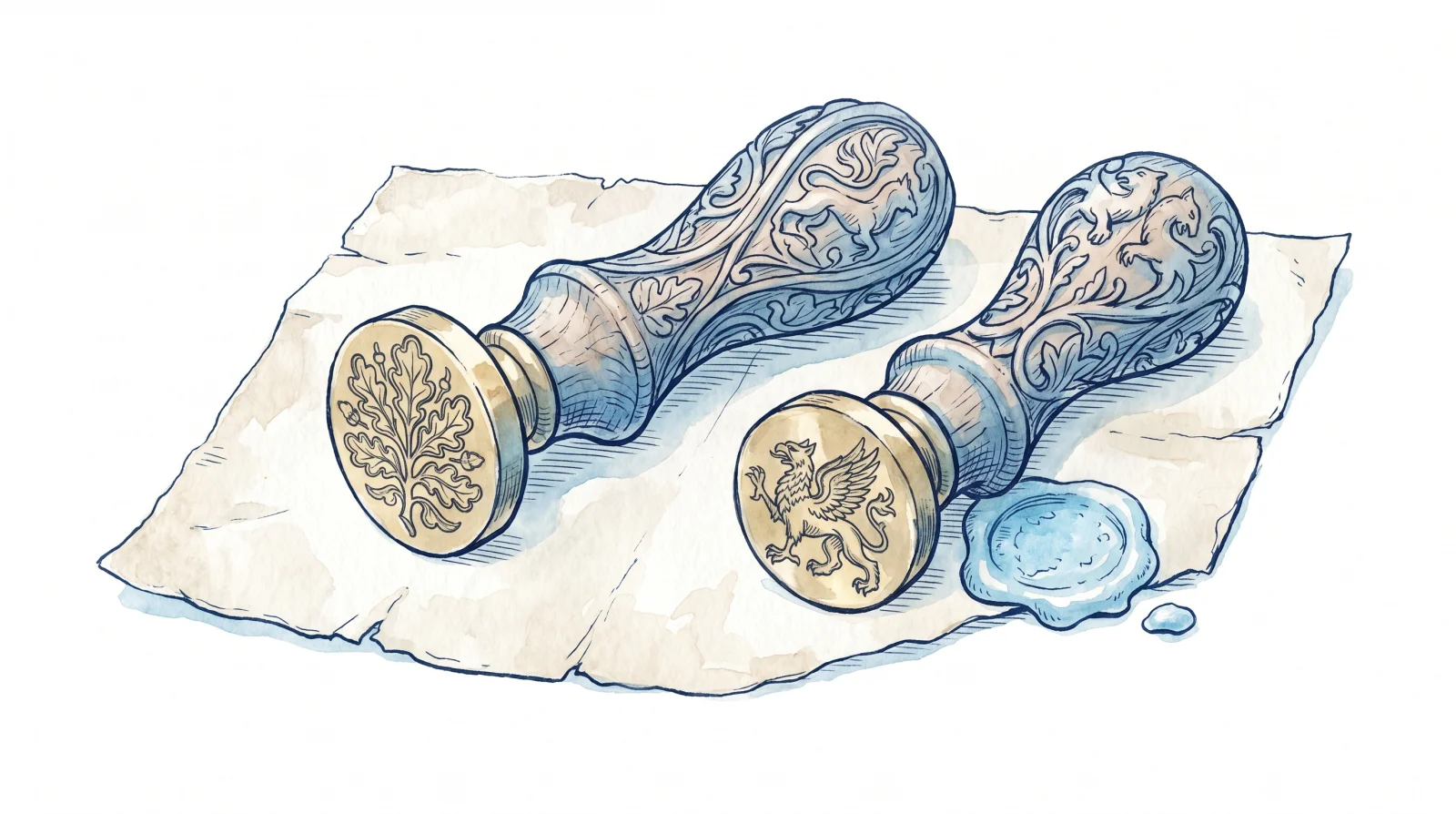
The AI content watermarking market effectively has two dominant standards. SynthID, built by Google, and C2PA, led by the Adobe-Microsoft camp. Market commentary frequently frames the two as direct competitors, but adoption data points to a different conclusion. The two standards occupy different stages of the same content lifecycle, and they can coexist on the same file.
This distinction matters. The EU AI Act Article 50’s design - not naming a single standard, just listing four criteria for “machine-readable” labeling - presupposes this coexistence. Framing as “who wins the standards war” misses what’s actually happening in the market.
This piece breaks down adoption data from five angles. (1) SynthID adopters and modality distribution, (2) C2PA member growth and category breakdown across 6,000+, (3) the two standards’ robustness and operational trade-offs, (4) EU Article 50’s operational definition gap, and (5) compliance gaming scenarios. The 5-Layer frame from the series Pillar becomes concrete market mapping here.
SynthID - Google’s Generation-time Signal
SynthID was first announced by Google DeepMind in August 2023. The core mechanism: embed an imperceptible signal in pixels, audio samples, or text token probabilities at the moment content is generated. The launch covered images only; audio (Q1 2024), text (Q2 2024), and video (Q4 2024) were added in stages.
Adoption Data - By Modality and Adopter
| Modality | Cumulative Application (May 2026) | Major Adopters |
|---|---|---|
| Image | 100B+ items (sharp acceleration after Google Imagen + OpenAI adoption) | Google (Imagen, Gemini), OpenAI (ChatGPT, Codex, OpenAI API), Kakao |
| Audio | 60,000 years’ worth of assets | Google (MusicLM), ElevenLabs, YouTube (automated cover detection) |
| Video | Undisclosed cumulative; Veo and Omni auto-embed | Google (Veo, Omni), YouTube Shorts |
| Text | Undisclosed cumulative; beta phase | Google (Gemini text outputs, selective) |
Verification call cumulative reached 50M by May 2026. The SynthID Detector portal unveiled at Google I/O 2026 - opening a verification interface to general users, journalists, and researchers - is the direct driver. With verification UX rolling out in stages across Google Search, Chrome, and Circle to Search, the monthly usage curve is set to steepen.
The adoption model centers on a single firm. Google DeepMind owns the technology and the standard; external firms adopt via licensing or partnership. Per Google I/O 2026, OpenAI applied SynthID to image generation across ChatGPT, Codex, and the OpenAI API. Text outputs are not yet covered. Kakao applies it to its AI-generated content (KoGPT outputs, Karlo image generation). ElevenLabs applies it to the full voice synthesis lineup.
Robustness and Weaknesses - Operational Assessment
The core strength here is robustness. The signal sits inside the content, surviving re-encoding, cropping, compression, and color correction to a significant degree. Google DeepMind’s own tests reported 95% detection rates even after JPEG compression at 75% quality. However, academic watermark removal research has reported detection dropping to 30 to 40% when adversarial training is applied.
Two weaknesses stand out. First, single-firm dependency. Google controls both the standard specifications and the detection algorithm; external firms negotiate the scope and terms of adoption. The interesting fact that an outside-camp player like OpenAI adopted SynthID reflects a combined decision - EU AI Act compliance pressure plus the cost of building proprietary watermarking. Second, open-source models cannot be covered. Llama, Mistral, Stable Diffusion, and other open-weight models cannot embed SynthID. This is the core bypass route covered in the series’ seventh piece (Why Watermarks Break).
C2PA - The Adobe·Microsoft Metadata Standard
C2PA (Coalition for Content Provenance and Authenticity) is an open standard founded in February 2021 by Adobe, Microsoft, BBC, Intel, Arm, and Truepic. It attaches origin, generation time, tools used, and edit history to the file’s metadata region, signed cryptographically. Think of photo EXIF data with security hardening - the key difference being that anti-tamper cryptographic signatures are part of the standard itself.
6,000+ Members - Category Distribution and Growth Curve
C2PA membership grew from six founders in February 2021 to over 6,000 by January 2026. A 1,000x increase in five years. But raw membership count is a surface metric; the real meaning shows in category distribution.
| Category | Estimated Member Share | Representative Members |
|---|---|---|
| Media / News | approximately 30% | BBC, NYT, Reuters, AP, Washington Post, Le Monde |
| Camera / Hardware | approximately 15% | Sony, Canon, Nikon, Leica, Qualcomm, Truepic |
| Production Tools (design, docs) | approximately 20% | Adobe, Microsoft, Figma, Affinity |
| OS / Browser | approximately 10% | Microsoft, Google (Chrome partial), Mozilla |
| AI Model Providers | approximately 5% | OpenAI (limited), Anthropic (observer) |
| Government / Standards Bodies | approximately 10% | NSA, CISA, BBC R&D, EBU |
| Other (SaaS, Consulting) | approximately 10% | OneTrust, Truepic, etc. |
The growth curve has two inflection points. The first: early 2024, when Sony, Canon, and Nikon added C2PA-compatible signatures via camera firmware. Cameras adopting a metadata standard means the standard gets embedded at the content production step itself - media and SaaS adoption accelerated. The second: January 2025, when the US NSA / CISA’s “Strengthening Multimedia Integrity in the Generative AI Era” report effectively elevated C2PA to a government-endorsed standard. Post-endorsement, global media and government adoption climbed sharply.
Camera Firmware Adoption Timeline - 2024
Camera firmware adoption is especially significant as a signal - it’s the starting point of the content lifecycle.
| Date | Manufacturer / Model | Scope |
|---|---|---|
| 2024.02 | Leica M11-P | C2PA built in from launch (Content Credentials) |
| 2024.05 | Sony Alpha 1, Alpha 7 IV (firmware V3.00) | C2PA-compatible signing added |
| 2024.06 | Canon EOS R5, R6 Mark II (firmware update) | Press cameras prioritized |
| 2024.07 | Nikon Z9 (firmware 5.00) | Press and documentary user-targeted |
| 2024.10 | Sony Alpha 9 III | Next-gen press camera, built in from launch |
| 2025+ | Fujifilm, Panasonic | Partial adoption, staged across new models |
Note that adoption priority concentrated on press and documentary lineups. Wire services like AP and Reuters started requiring C2PA signing on wire-distributed photos. Camera manufacturers responded with firmware updates to maintain competitiveness in the press market. Consumer camera diffusion takes longer, but global news distribution itself is already operating on C2PA.
Media Adoption - Wire vs Publishing
For media adoption, “which outlet adopted” matters less than at which stage they adopted.
| Outlet | Adoption Stage | Timing |
|---|---|---|
| BBC News | Production (broadcast content distribution) | Full in late 2024; R&D began 2023 |
| New York Times | Pilot → Full production | Full in 2026 (pilot through 2025) |
| Reuters | Wire-distributed photo signing | Full in 2025 |
| Associated Press (AP) | Wire photo and video signing | Full in 2025 |
| Washington Post | Graphics and illustration department first | 2025 |
| Le Monde, Guardian | Partial adoption (photo desk) | 2025-26 |
Wire-stage adoption (Reuters, AP) carries the most weight. Wire is the backbone of global news distribution, so content signed at the wire stage propagates automatically downstream - to newspapers, broadcasters, and online outlets worldwide. A single AP-signed photo means C2PA signing flows to thousands of derivative pages simultaneously. The structure beats raw adopter counts in determining the global content authenticity infrastructure default.
One Thing Worth Noting
The number “6,000 C2PA members” is a surface metric. The real meaning is the carbon-copy effect. Sony, Canon, and Nikon updating camera firmware means “signing at capture” happens without user awareness. BBC, NYT, Reuters, and AP signing at the wire stage means the global media ecosystem riding on those wires automatically rides on the standard. Adoption position in the lifecycle backbone vs the periphery matters more than headcount.
Two Standards - Same Market, Different Layers
| Comparison | SynthID | C2PA |
|---|---|---|
| Layer | Generation-time | Metadata / Cryptographic (external attachment) |
| Insertion site | Pixels / audio samples / token probabilities | File metadata region |
| Governance | Single firm (Google DeepMind) | 6,000+ member standard |
| Robustness | Strong against re-encoding, crop, compression | Weak against screenshots, metadata stripping |
| Application timing | When AI model generates | When production tool or camera creates |
| Adoption model | Licensing / partnership | Standard adoption + membership |
| Strong domain | AI-generated content authenticity | Original authenticity + edit provenance |
| Weakness 1 | Open-source model bypass | Lost via metadata strip or screenshot |
| Weakness 2 | Single-firm dependency | Author privacy exposure |
The decisive point: both standards can live on the same file. An AI-generated image carries a SynthID signal; once edited in Adobe Photoshop, C2PA records the edit history in metadata. The same file holds two kinds of attestation simultaneously. At verification time, the two standards cover each other’s weaknesses. If metadata is stripped, fall back to the SynthID signal. For content that lacks SynthID (open-source model outputs), trace origin via C2PA metadata.
The EU GPAI Code of Practice draft mandating a multi-layered approach has this design in the background. Single-standard reliance leaves bypass or strip routes always open, weakening governance. Joint adoption of both standards becomes the de facto default compliance path.
EU AI Act Article 50 - Operational Definition Gap
The direct force pulling adoption rates up is EU AI Act Article 50. Enforcement date: August 2, 2026.
Core text: AI-generated images, video, and audio must be labeled in a “machine-readable” format identifying them as AI-generated. Penalties up to €15M or 3% of global revenue.
The problem is that “machine-readable” has no operational definition. Article 50 only lists the following four criteria.
| Article 50 II Required Criteria | Operational Definition Status (May 2026) |
|---|---|
| Effective | Undefined; GPAI Code of Practice to fill |
| Interoperable | Undefined |
| Robust | Undefined; shared robustness benchmark incomplete |
| Reliable | Undefined; independent audit mechanism missing |
arXiv 2603.26983, “Transparency as Architecture: Structural Compliance Gaps in EU AI Act Article 50 II,” is an academic critique aimed squarely at this gap. With none of the four criteria operationally defined, neither operators nor regulators can confidently determine what constitutes compliance.
The EU is aware of this gap. The GPAI Code of Practice final draft, due May-June 2026, fills part of the operational definitions. Harmonized standards work is scheduled through spring 2026, but there’s a lag between enforcement and standards completion. The EU Council’s May 7, 2026 provisional agreement shortened the grace period to three months, raising the joint-adoption pressure on operators.
The result is clear. To pass compliance, a single standard isn’t really enough. Joint adoption of SynthID (generation-time) + C2PA (metadata) becomes the safest path. The EU chose not to name a single standard, while forcing multi-layer adoption through indirect design.
Compliance Gaming - Operational Scenarios
The most concrete risk flagged by arXiv 2505.23814, “Watermarking Without Standards Is Not AI Governance,” is compliance gaming. In the absence of a shared robustness benchmark, firms can implement the weakest watermarking scheme and still claim EU AI Act compliance. Concrete scenarios:
| Gaming Scenario | How It Works | Required Block Mechanism |
|---|---|---|
| Minimum-strength watermark | Adopt an algorithm academically known to be 90%+ removable, claim “we labeled it” | Shared robustness benchmark |
| Selective application | Apply to only some modalities (e.g., images), skip others (text, audio) | Per-modality coverage requirements |
| Metadata-only adoption | Attach only C2PA metadata, skip watermark signal; bypass via metadata stripping | Multi-layer adoption requirements (Code of Practice’s response) |
| Proprietary standard claim | Claim externally-unverifiable proprietary watermark fulfills the obligation | Independent audit mechanism |
| Delayed adoption | Use grace period to dump pre-enforcement content without coverage retroactively | Retroactive application requirement |
The EU GPAI Code of Practice mandating a multi-layered approach reads as a design intended to block the third scenario. But the first and fourth - weak watermarks and externally-unverifiable claims - remain open. If shared benchmarks and independent audit mechanisms don’t grow as infrastructure over the next 2-3 years, compliance gaming could become the default.
One Thing Worth Noting
The compliance-gaming possibility doesn’t mean watermarks are “useless.” For honest operators (Big Tech + media + tool providers), it works as a disclosure signal. Since over 95% of global content distribution passes through these honest operators, the average improves significantly. The key is not to mistake watermarks for blocking mechanisms against malicious scenarios like deepfake fraud. Blocking has to come from other layers - KYC, identity verification, legal penalties. The next pieces in the series take up these other layers.
What the Adoption Data Tells Us - Lifecycle Mapping
| Content Lifecycle Stage | Adopted Standard | Representative Adopters |
|---|---|---|
| AI model generation | SynthID | Google, OpenAI, Kakao, ElevenLabs |
| Camera capture | C2PA | Sony, Canon, Nikon, Leica |
| Production tool editing (design, docs) | C2PA | Adobe, Microsoft, Figma |
| Media wire distribution | C2PA | Reuters, AP, BBC, NYT |
| Browser verification UX | Split | Chrome (SynthID), Edge (C2PA), Safari (observer) |
| Government endorsement | C2PA | NSA, CISA |
| EU compliance recommendation | Both jointly | GPAI Code of Practice (multi-layer) |
Within the same content lifecycle, the two standards divide labor cleanly. The generation moment goes to SynthID. The subsequent distribution, editing, and verification stages go to C2PA. User-facing verification interfaces are moving down to the browser layer for both standards. Google Chrome is rolling out SynthID verification in phases following the May 2026 announcement. Microsoft Edge already displays C2PA Content Credentials.
For Korean operators, this division of labor implies different burdens. NAVER, Kakao, and others operating their own AI tools need to evaluate SynthID (or equivalent generation-time watermark) application. Media and publishers need to set up C2PA metadata attachment workflows. Global AI operators (OpenAI, Google, Anthropic) have already adopted SynthID or hold proprietary solutions, so EU compliance applies directly to Korea-launched services.
Closing - Division of Labor, Not Competition
The two standards get framed as competitors in market commentary, but adoption data shows them occupying different stages of the same lifecycle. SynthID takes the AI generation moment. C2PA takes the camera, production tool, and news distribution moments. The operational definition gap in EU Article 50, the multi-layered requirement in the GPAI Code of Practice, the compliance-gaming possibility, and the lifecycle-stage adoption distribution - all the clues point to the same conclusion.
Bundled together - both standards rest on the same assumption. AI content authenticity governance does not function with a single standard. That’s why the EU chose not to name a specific standard and designed multi-layer adoption as the de facto requirement. Honest operators are also adopting both standards together as their default path.
The next piece moves to Layer 2. Not content authenticity, but actor authenticity - mapping the Proof of Personhood adoption curve from iris scans to Passkeys.
References
- Google DeepMind - SynthID official page + technical report
- Google Blog - “SynthID Detector - a new portal to help identify AI-generated content” (2026-05-19)
- Google Blog - “100 things we announced at Google I/O 2026”
- C2PA.org - Specifications v2.0 + Member List
- Adobe Content Authenticity Initiative - quarterly reports
- Eyesift - “C2PA Content Credentials 2026 Adoption Guide”
- Sony, Canon, Nikon - 2024 firmware release notes (C2PA support)
- BBC R&D - Content Credentials production deployment report
- NSA / CISA - “Strengthening Multimedia Integrity in the Generative AI Era” (2025-01)
- artificialintelligenceact.eu - Article 50 Transparency Guide
- EU Council - May 2026 provisional agreement
- TechPolicy.Press - EU Code of Practice for Labeling Deepfakes
- arXiv 2505.23814 - “Watermarking Without Standards Is Not AI Governance”
- arXiv 2603.26983 - “Transparency as Architecture: Structural Compliance Gaps in EU AI Act Article 50 II”
- World Privacy Forum - “Privacy, Identity and Trust in C2PA: A Technical Review”
Related Posts

The AI Trust Stack - Content, Personhood, and Agents in Three Layers
As AI-generated content becomes the default, trust infrastructure is splitting into content, personhood, and agent-identity tracks. Five markets, a 5-layer frame, five Big Tech camps, VC flows, and regulation - placed on a single plane.
AI Governance Is Heading Down a Different Path - Mapping the Current Branches
AI governance is heading down a different path from typical regulation. EU, Korea, and US legislation, academic critique, market autonomous adoption, identity/KYC complement, compliance SaaS - five branches pointing the same direction, plus the 5 elements of governance taking shape.
The Identity Track - From Proof of Personhood to AI Agent Delegation
Proof of personhood and AI agent identity are two layers of the same track. World ID, Passkey, DID adoption curves + Defakto, t54, Indicio funding + payment network entries - the entire identity track in one piece.